Industry
Media & Publishing
Client
Condé Nast
Project Type
Design Systems
Establishing Global Product Design Patterns
Challenge & Approach
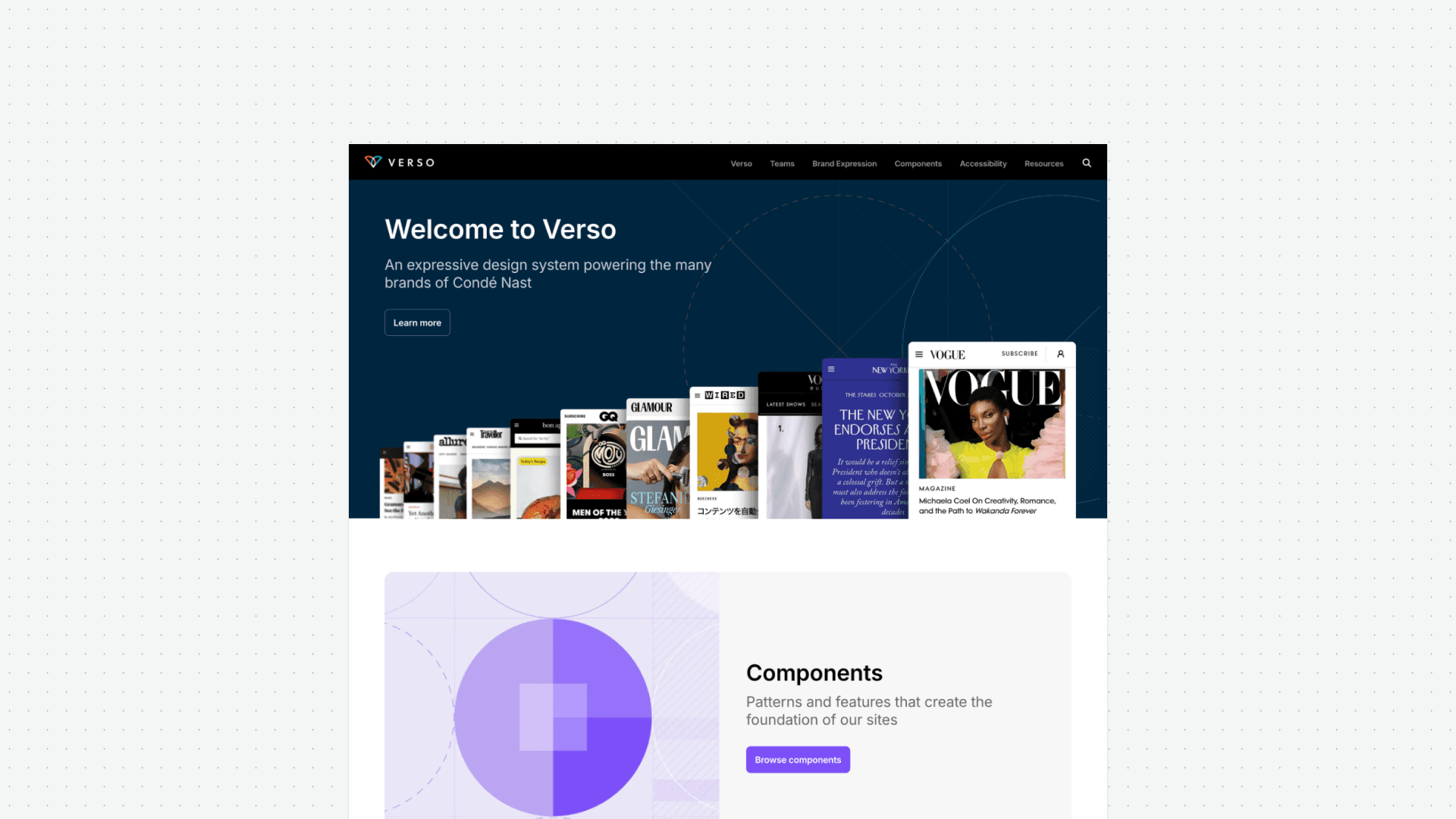
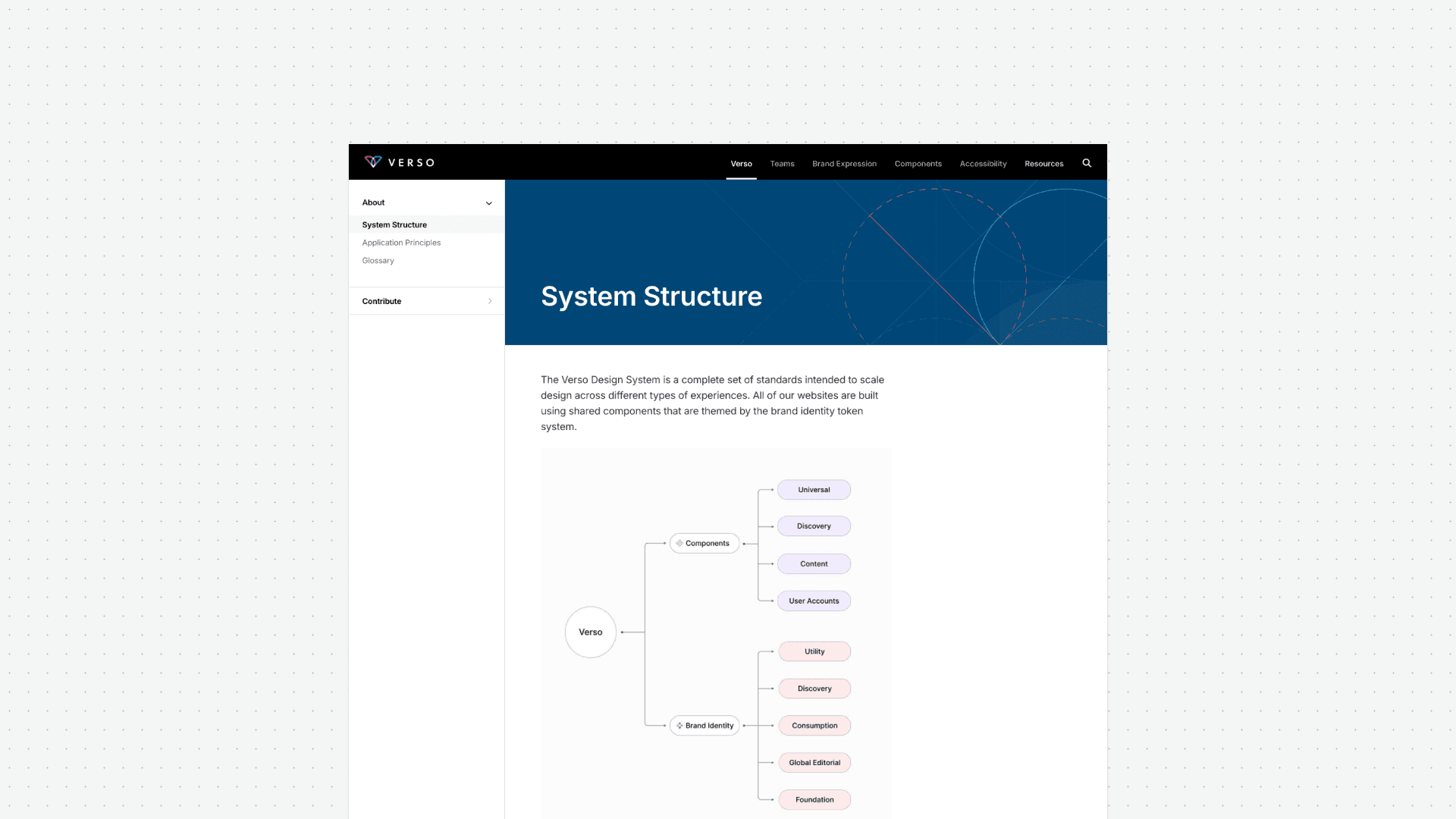
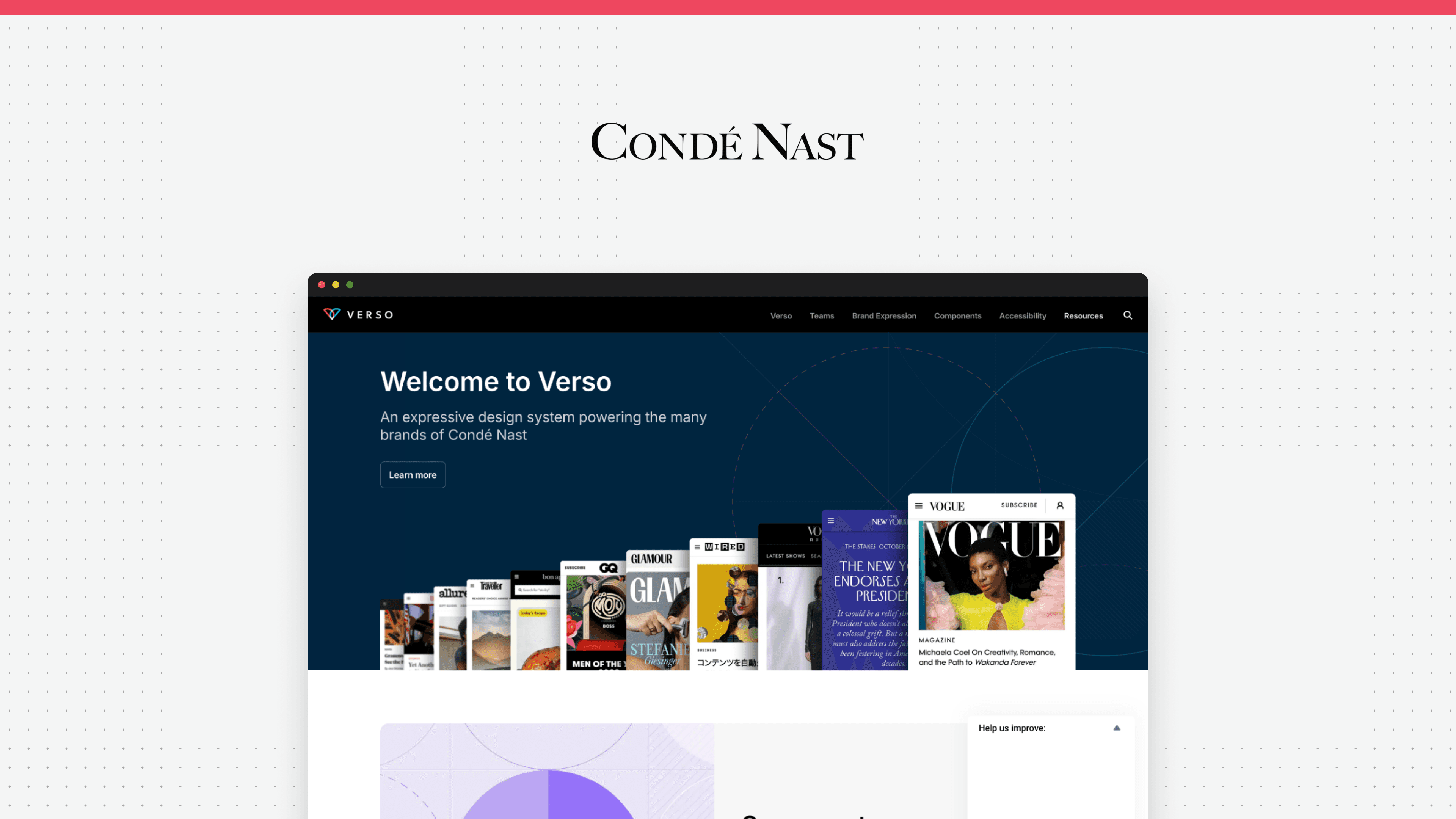
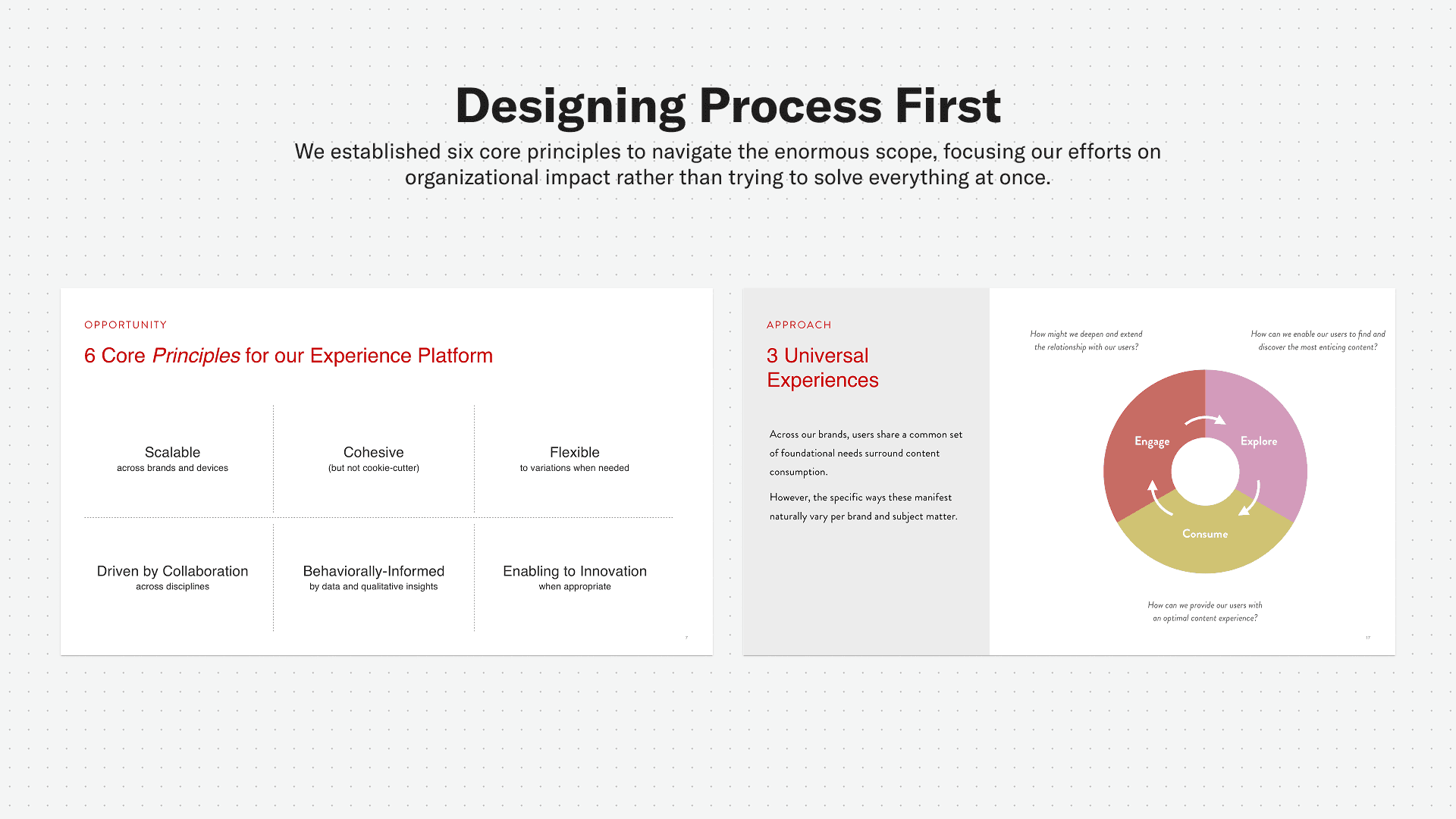
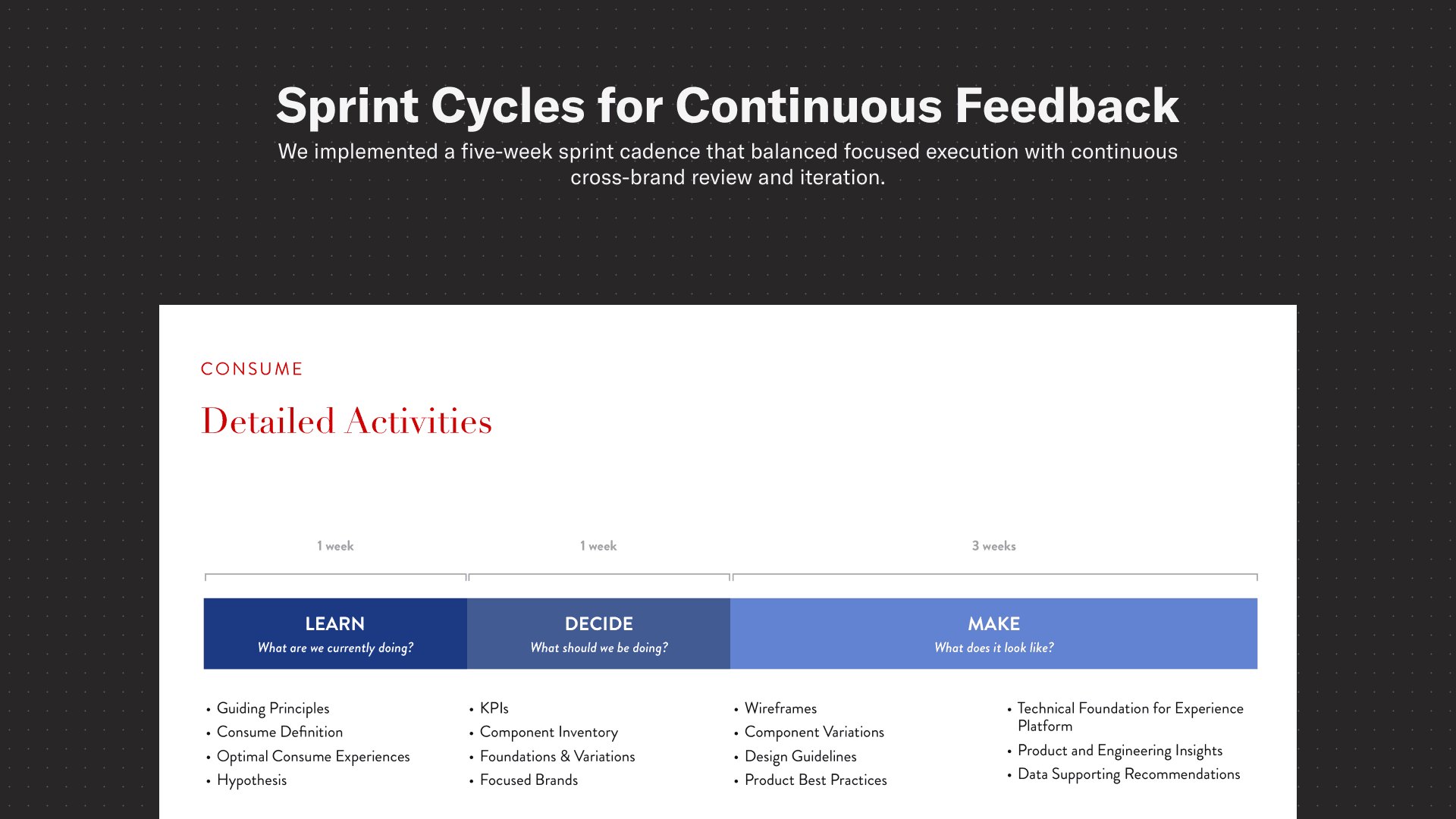
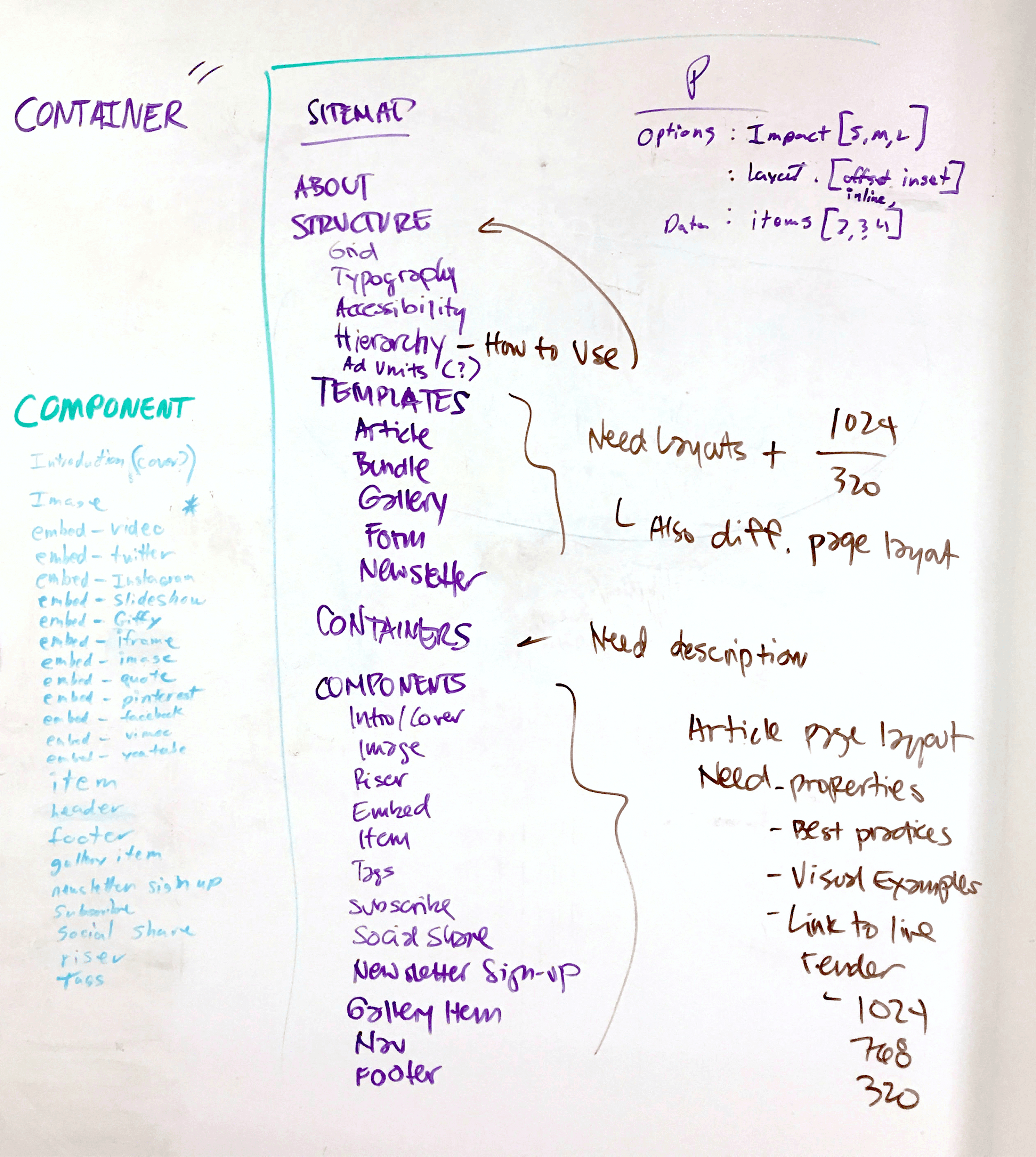
Condé Nast's internal design organization, Co/Lab, faced a unique opportunity: the company had just unified its 22 brands onto a custom CMS, creating the potential for unprecedented design standardization and velocity. I led the strategy to transform this technical foundation into a scalable design platform that could drive rapid product development across vastly different editorial properties. We established six core principles to navigate the enormous scope, focusing our efforts on organizational impact rather than trying to solve everything at once. I then structured our process around three universal experience categories (core reading experiences, content discovery patterns, and utility interactions) and implemented a five-week sprint cadence that balanced focused execution with continuous cross-brand review and iteration.
System Design & Collaboration Model
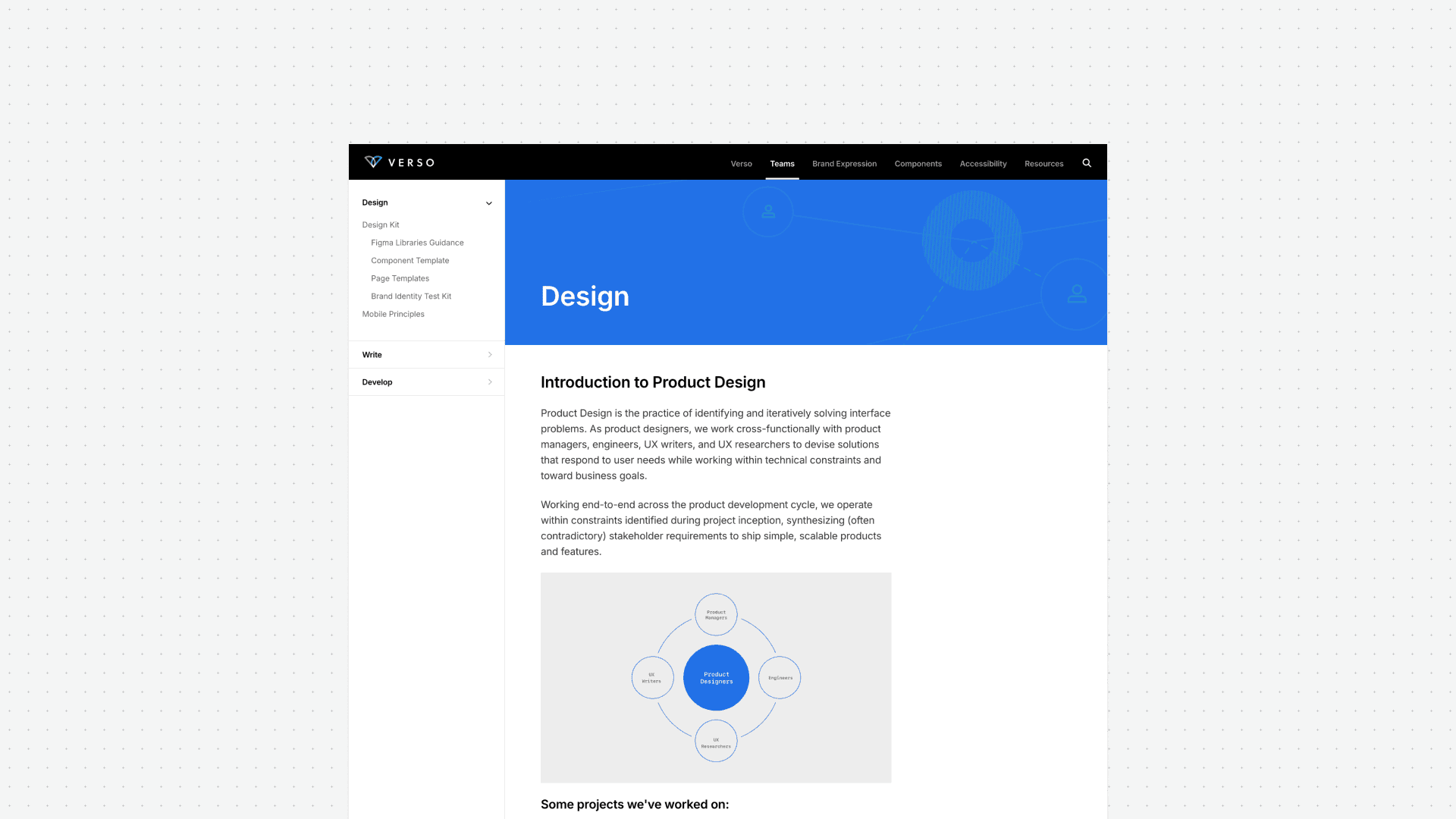
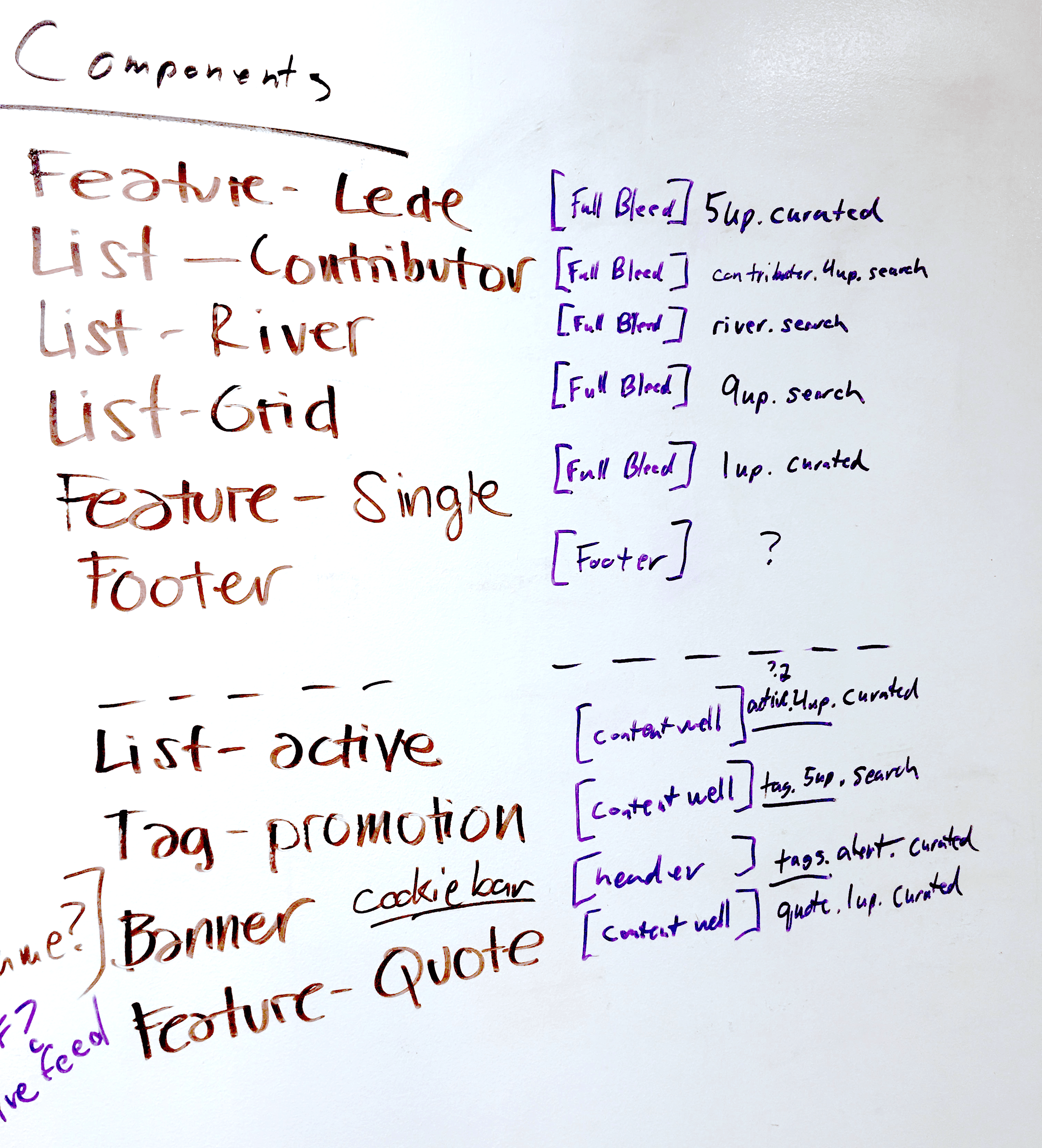
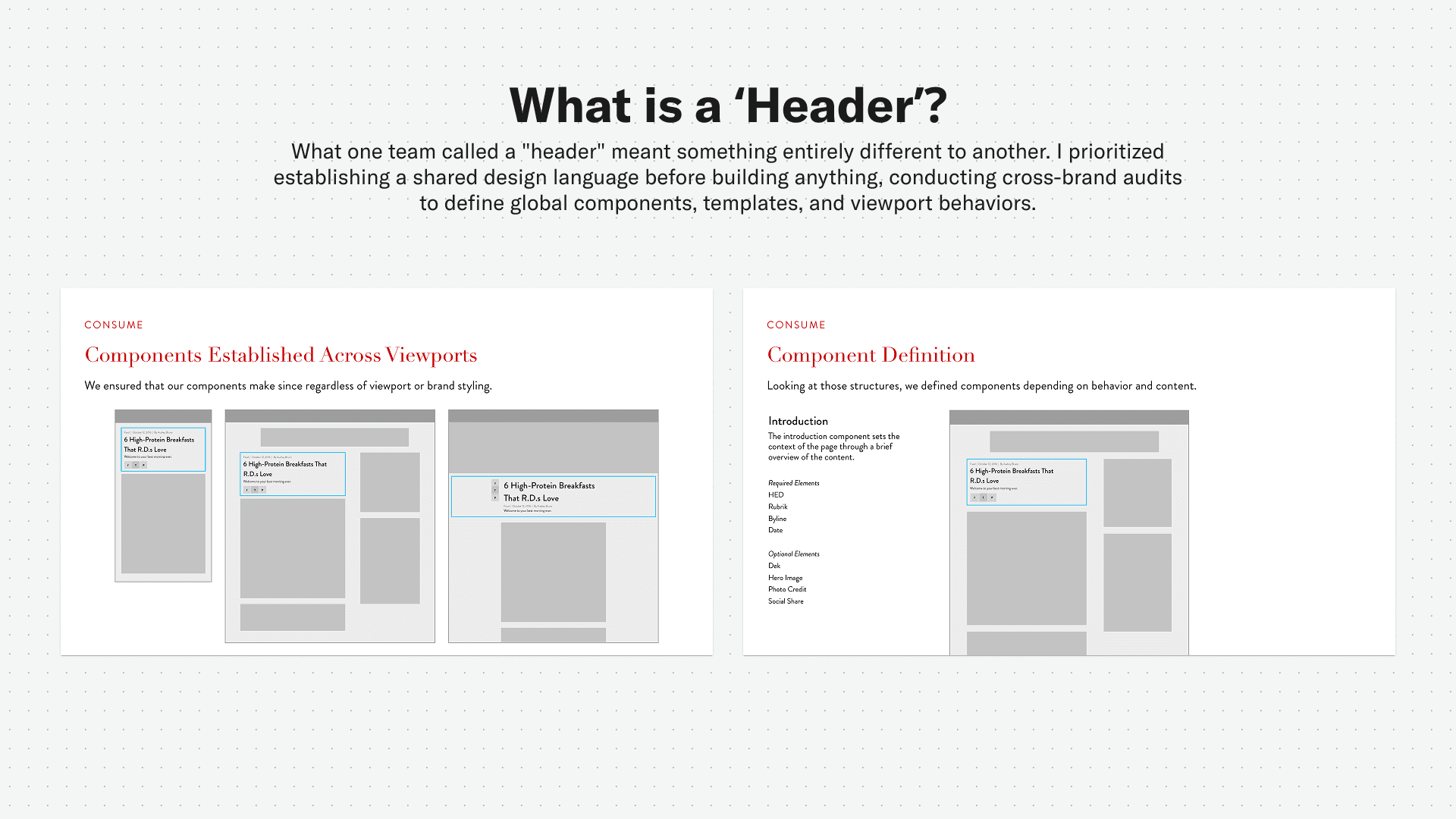
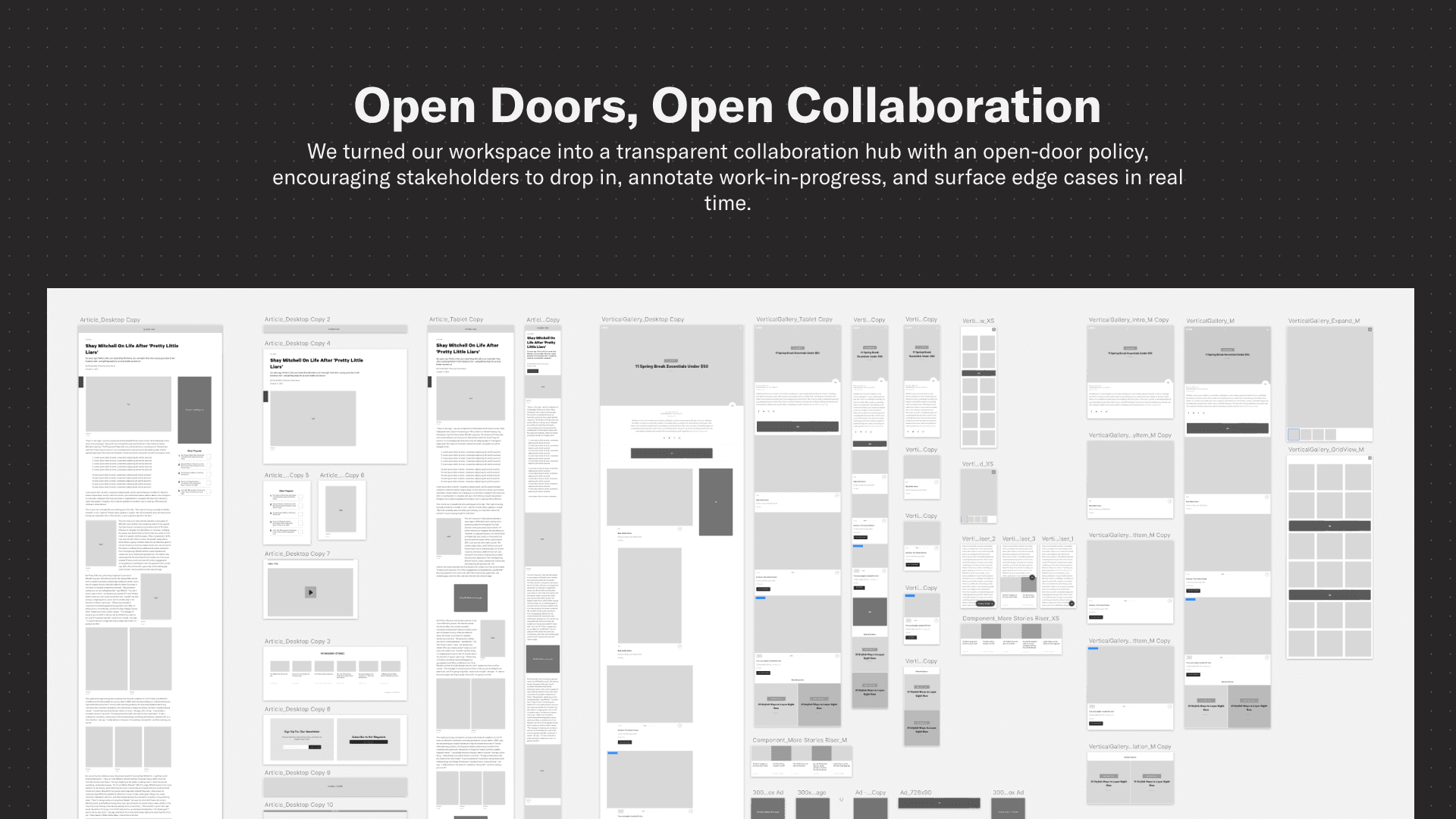
The first critical insight was that each brand operated with its own vocabulary for digital components. What one team called a "header" meant something entirely different to another. I prioritized establishing a shared design language before building anything, conducting cross-brand audits to define global components, templates, and viewport behaviors. We turned our workspace into a transparent collaboration hub with an open-door policy, encouraging stakeholders to drop in, annotate work-in-progress, and surface edge cases in real time. Leveraging the new CMS's capabilities, we built all component examples natively within the platform itself, creating live, skinnable pages that stakeholders could interact with immediately. This approach collapsed the feedback loop from weeks to hours and ensured our abstractions held up under real content constraints.
Outcomes & Impact
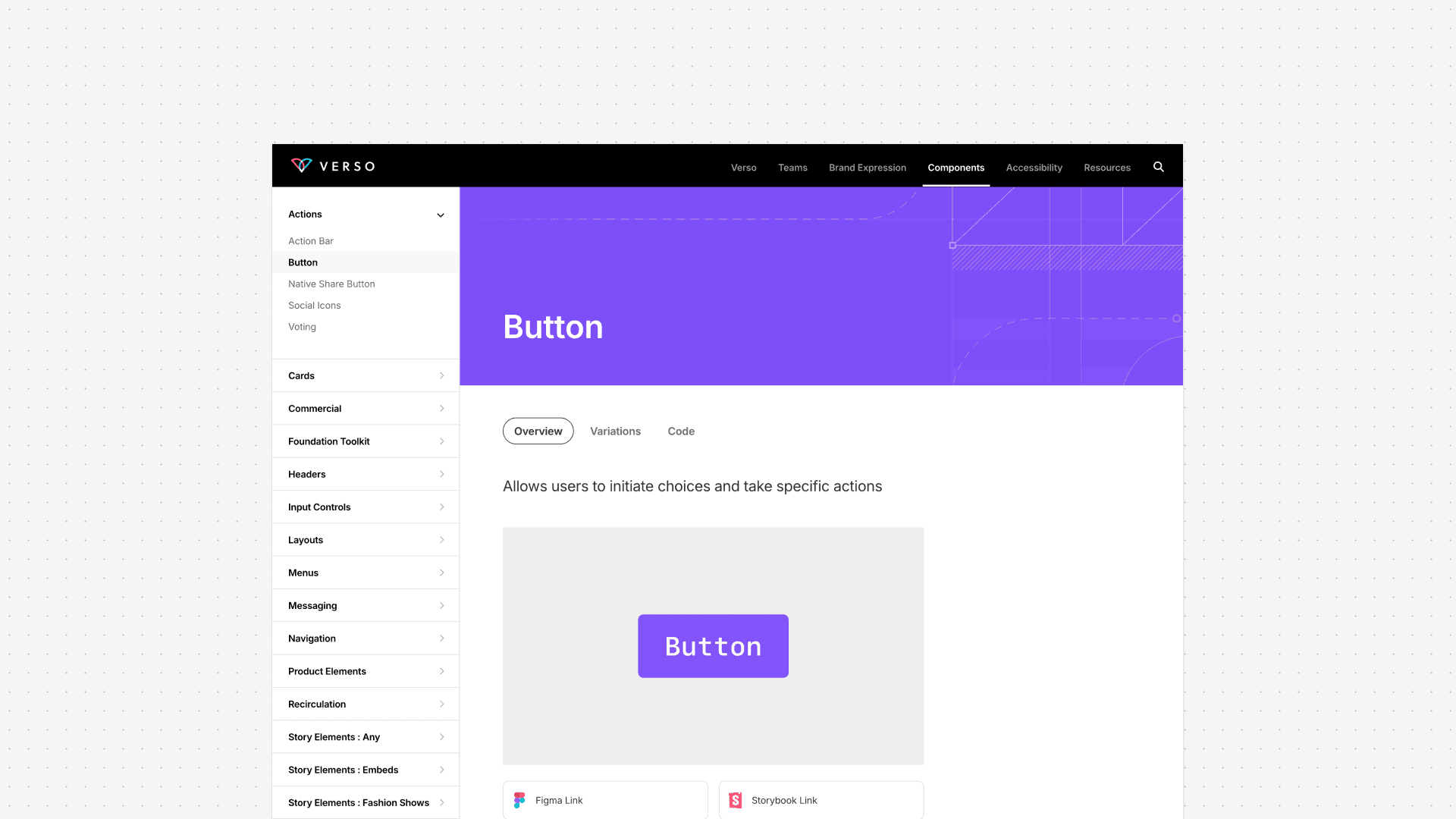
We delivered an interactive component library with 36 defined global components, complete with live code snippets and customizable samples, all running natively in the CMS to enable instant adoption. More importantly, we established the vocabulary, governance model, and sprint structure that allowed the next team to continue evolving the platform without organizational friction. The Verso Design Platform fundamentally changed how Condé Nast operated digitally: cross-brand knowledge transfer accelerated, prototype-to-production timelines compressed, and business insights could be tested and deployed across properties within days instead of months. By anchoring the system in shared language and living examples rather than static documentation, we created a platform that grew with the organization's needs.
Director of Product — Charl Porter
Lead Developer — Phil Gold
UX Director — Peter Knocke
UX Designer — Jomi Cubol